
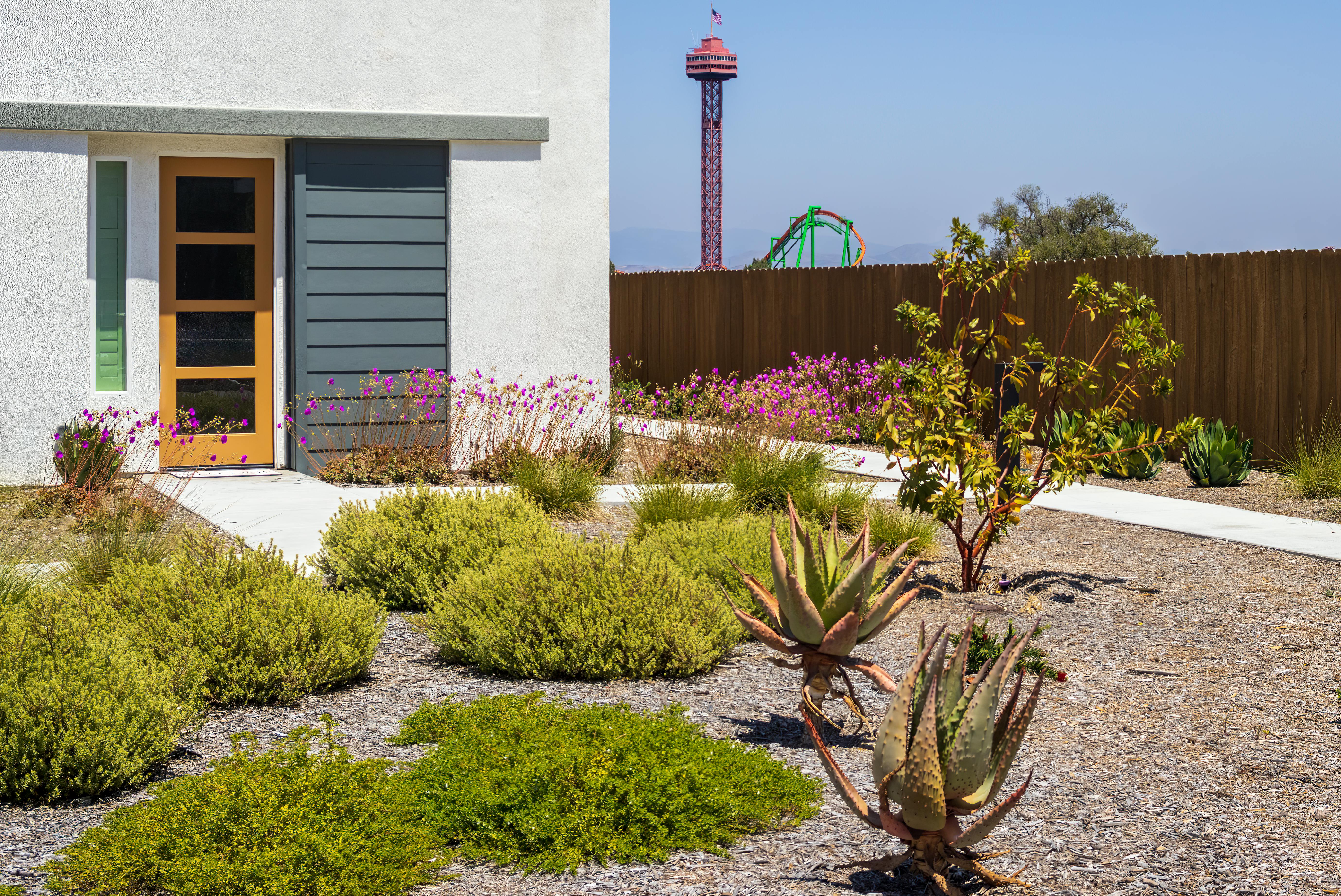
The Importance of Fire-Resistant Landscape Design
When it comes to wildfires, one of the most effective risk reduction strategies is fire-resistant landscaping. Often referred to as defensible space or firescaping, fire-resistant landscape design focuses on designing, installing and maintaining areas around structures to reduce combustible material. This is why designing for wildfire resilience is crucial in landscape design.
Fire-resistant landscaping is built around three core objectives: Distance, fuel reduction and fire interruption. Whenever possible, defensible space created through fire-resistant landscaping should extend at least 100 feet in all directions from a structure. This separation reduces exposure to radiant heat and flame contact. Once the defensible area is established, vegetation and other combustible materials should be reduced as much as possible. Unmanaged vegetation can allow fire to spread vertically from grasses to shrubs, trees and ultimately the canopy. Fire-resistant landscaping interrupts these pathways by managing both horizontal and vertical spacing.


