
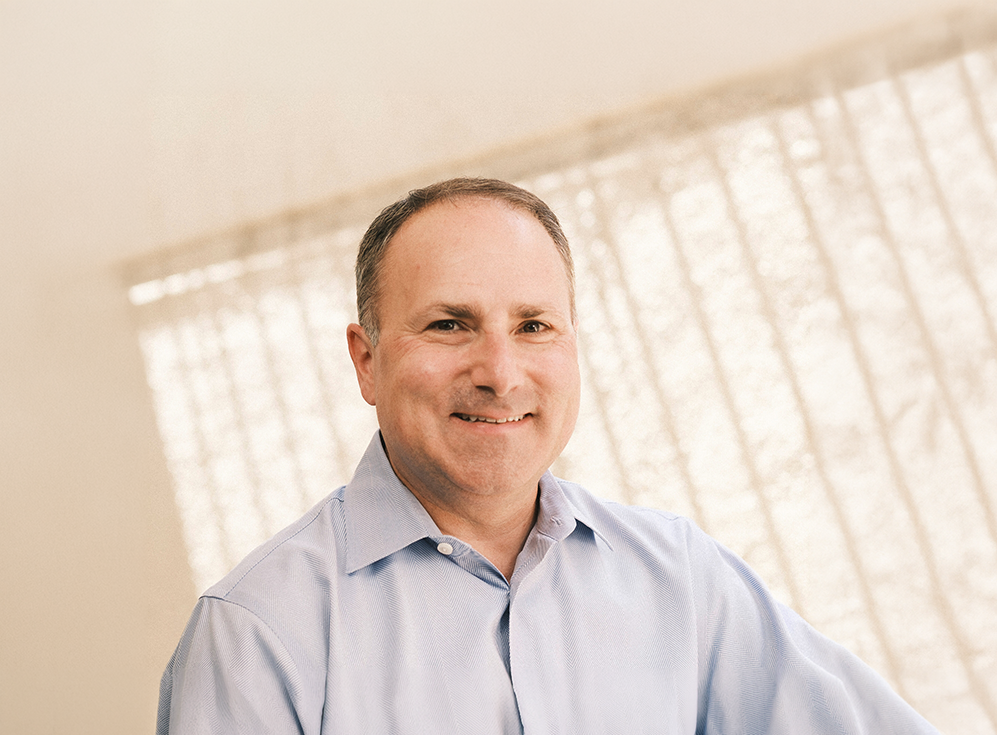
GHB Interview: John Danielian, AIA, LEED AP
In our May/June interview, John Danielian, President of Danielian Associates, discusses architecture trends, building science collaboration and the future of sustainable design.
Green Home Builder: We’re at the mid-year point of 2026. How are your current design choices being informed by the housing market and buyer demographics?
John Danielian: At the midpoint of 2026, our design approach continues to be heavily influenced by affordability, evolving buyer demographics and the need for long-term flexibility in housing. We are seeing buyers become much more value-conscious, which has reinforced the idea that “less is more.” Rather than focusing on excessive square footage, we are designing more efficient floor plans that maximize livability, functionality and perceived value. Buyers still want thoughtful design and strong architectural character, but they are prioritizing usable space over unnecessary excess.
Flexibility within the home has also become increasingly important. We continue to design spaces that can adapt over time, whether for multigenerational living, remote work, wellness or changing family needs. Rooms are being designed with greater versatility so homeowners can evolve within the home rather than outgrow it.
In California specifically, fire protection and resiliency have become much more prominent considerations in both planning and architectural design, particularly in fire-prone regions. Material selections, defensible space strategies and overall community planning are being approached with a greater emphasis on safety, durability and long-term performance.
We are also seeing continued demand for accessory dwelling units (ADUs) as both a housing solution and a lifestyle amenity. Buyers and developers recognize the value ADUs bring for extended family living, rental income and overall property flexibility. In California, many of our projects are also being shaped by opportunities created through recent Senate Bills, which continue to encourage higher density, infill housing and more creative approaches to residential planning. These legislative changes are allowing projects to achieve greater yield while still creating thoughtful and livable communities.
GHB: What architectural trends are you seeing shaping design, from luxury move-up homes to sustainable housing?
JD: Across the housing market, from luxury move-up homes to more sustainable housing solutions, today’s buyers are far more informed and design-savvy than ever before. With endless inspiration and information available online, buyers often come into the process with a clear vision of what they want, whether it relates to floor plan functionality, architectural style, interior finishes or outdoor living environments. This has pushed architects and builders to create more personalized and thoughtfully curated homes that feel authentic rather than overly manufactured. Owners are more equipped to communicate what they want now.
We are also seeing a strong preference toward the use of authentic, natural materials that add warmth, texture and timeless character to homes. Materials such as natural stone, wood accents, exposed steel, brick and textured concrete are becoming increasingly popular across a wide range of product types. Buyers are gravitating toward designs that feel honest and enduring, with less emphasis on overly ornate detailing and more focus on simplicity, craftsmanship and quality.
Sustainability has also evolved from a niche consideration into a mainstream expectation, particularly in California where energy efficiency, resiliency and environmental responsibility continue to shape the way communities are designed. Buyers now expect homes to incorporate sustainable strategies such as enhanced insulation, energy-efficient systems, solar integration, water-conscious landscaping and healthier indoor environments. At the same time, advancements in building products and construction technologies have made alternative and more sustainable materials far more commonplace and accessible than they were even a few years ago.
GHB: As the principal architect for both ABC Green Home 3.0 and ABC Green Home 5.0 TerraVerde, how has collaborating with building science partners influenced or refined your approach to high-performance design?
JD:Working on both ABC Green Home 3.0 and ABC Green Home 5.0 Terra Verde has given us the opportunity to see firsthand how much the industry has evolved over the last decade. When we designed ABC 3.0 nearly ten years ago, many of the products, materials and technologies that are now considered standard in high-performance housing were either limited, cost-prohibitive, or simply not available. Today, the market has expanded significantly, giving architects and consultants far more tools to create homes that are energy efficient, resilient and healthier for occupants without compromising design.
One of the biggest influences on our approach has been the increasing collaboration between specialists in sustainability, building science consultants, engineers, product manufacturers and contractors. High-performance design has become much more integrated and collaborative than it was in the past. Rather than sustainability being treated as a separate layer added onto a project, it is now part of the design conversation from the beginning. That collaboration has refined how we think about building envelopes, material selection, energy performance, indoor air quality and long-term durability.
It has also reinforced the importance of balancing performance with livability and aesthetics. Through working closely with building science partners, we have been able to better understand how systems and materials perform together as a complete environment, allowing us to create homes that are not only sustainable, but also more comfortable, functional and attainable for today’s buyers.
What key lessons or technologies from ABC Green Home projects do you think are most ready to be adopted by mainstream, volume production builders?
JD: Many of the materials, technologies and design philosophies explored through the ABC Green Home projects have already transitioned into mainstream residential development since the program first began. Features that were once considered progressive, such as insulated attics, solar panels, enhanced energy efficiency strategies and water conservation systems are now commonly incorporated into production housing, particularly in markets like California where sustainability expectations have become standard. What was once viewed as experimental has increasingly become part of the baseline for responsible homebuilding.
One area we believe is especially ready for broader adoption among volume production builders is the integration of architecture and site orientation as part of a more holistic sustainability strategy. Within our internal R&D studio, we call iDA+Lab, we are currently studying how specific architectural styles can be intentionally paired with building orientation to improve overall performance and livability. For example, a contemporary home with extensive glazing may be better suited for a northern-facing orientation to minimize heat gain while maximizing natural light. Conversely, a Spanish-style elevation with reduced glazing, deeper recesses and shaded elements such as awnings may perform more effectively on southern-facing lots. We see this as the next evolution of sustainable production housing, moving beyond simply adding green technologies and toward designing homes that work more intelligently with their environment from the very beginning.
GHB: Beyond basic energy efficiency, how do you see the sustainable design and building market evolving over the next few years?
JD: Beyond basic energy efficiency, the sustainable design and building market is evolving toward smarter, more responsive homes that actively adapt to the way people live. One of the biggest shifts we see over the next few years is the integration of AI technology directly within the home environment. Rather than simply reducing energy consumption through better insulation or solar panels, homes will become intelligent systems that monitor and optimize performance in real time. In many ways, some of these technologies are already being integrated into homes today through smart thermostats, automated lighting systems, energy monitoring applications, leak detection devices and connected appliances. What we are seeing now is just the beginning of a much more advanced and fully integrated ecosystem.
Looking ahead, imagine a centralized dashboard that controls and manages the home while learning a family’s living patterns and behaviors over time. These systems will be able to automatically adjust lighting, heating, cooling, ventilation and shading based on occupancy, time of day, weather conditions and personal preferences. We also anticipate a much greater emphasis on environmental and wellness monitoring within the home. Air quality sensors, humidity controls and water management systems will become increasingly common, allowing homeowners to better understand and improve their indoor environments. At the same time, AI-driven systems will monitor utility demand and peak usage periods, helping homes operate more efficiently by reducing unnecessary water and electricity consumption during high-demand times. Ultimately, sustainability is moving beyond static building materials and energy calculations toward fully integrated, intelligent living environments that enhance comfort, health, efficiency and long-term resilience.
This is the full interview, read the print version in GHB May/June.


