
Advancing Climate Action Through Passive Design
Birdsmouth Design + Build engineers with both architecture and carbon neutrality in mind
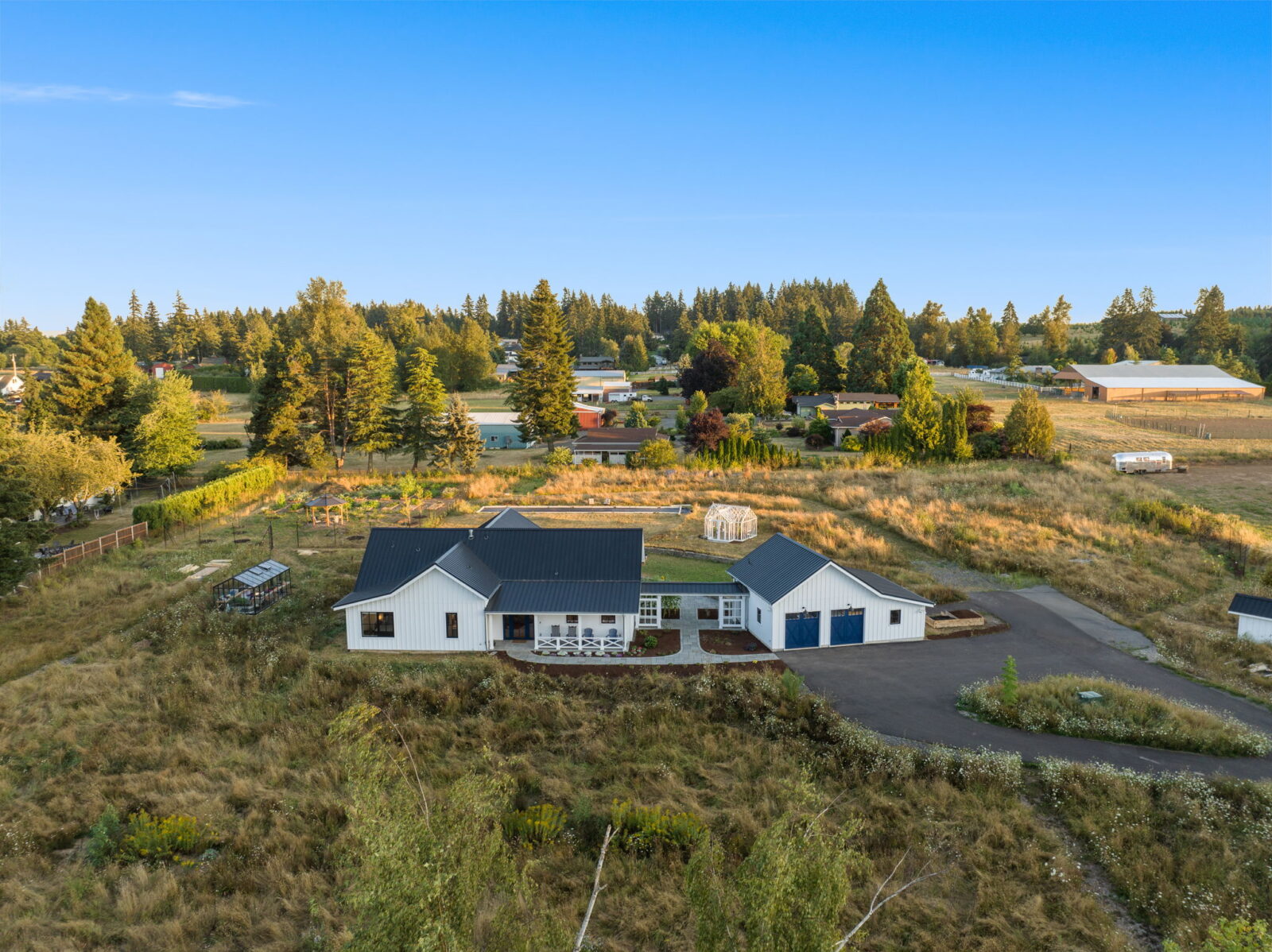
Just outside of the Portland Metro area, in Damascus, Ore., a snowstorm and cold snap knocked out power for four days. The homeowners never even noticed the outside temperature plummeted to a harsh 15 degrees. In fact, they were a little too warm in the south-facing kitchen window and deployed a solar shade over the pergola.
The air-tight building envelope worked exactly as designed, keeping the cold out and the warmth in. The Damascus house is a built example of performance in motion, a house designed for long-term reliance and livability.
“Often this story of the resiliency of this home helps illustrate how simply doing things right, with the right materials, a good design and quality construction, can lead to any stated outcome our clients may have,” said Josh Salinger, Founder and CEO of Birdsmouth Design + Build. “It is truly a win-win-win approach to designing and constructing buildings.”


Birdsmouth Mission
Birdsmouth describes its core mission as climate action through the built environment. Though expressed differently in each project, this ethos culminates in high-performance homes built to help clients live healthier with less environmental impact.
“Roughly 40% of global greenhouse gas emissions come from buildings, so if we are wanting to make an impact on climate and for people, building this way becomes something to be proud of,” said Salinger. “It becomes a virtuous circle that leads to better outcomes for people, the planet and prosperity.”
In 2008, Salinger founded Birdsmouth Design + Build with a generational love for building and a background in zoology and conservation. In the beginning, client education was a large aspect of the business.
“The market has changed quite a bit and we are finding that people are more versed in these building strategies, materials and systems that are used,” said Salinger. “Nowadays more and more people understand the benefits of these types of homes.”
After nearly two decades, Birdsmouth has grown to have an in-house architecture and construction staff with close ties to trusted engineers and interior designers. Salinger noted that Birdsmouth is also in the process of becoming a worker-owned cooperative.


Carbon-Conscious Construction
The Damascus project began as a five-acre lot with a dilapidated house filled with asbestos and lead. After abatement and deconstruction, the permitting and site construction took an estimated seven months. Pre-construction required building an entirely new infrastructure for a new well, pump house and septic system alongside electrical design with coordination with the local utility.
The transition from design contract to home construction was an estimated 14 months. While this was a longer lead time, optimizing the home’s orientation is one of the most critical aspects of passive design. The site survey factors in seasonal sun paths and winds, existing vegetation, privacy, slope, water runoff, utilities and driveway access.
Birdsmouth used a BEAM carbon calculator to select building materials based on their environmental impact. This led to the selection of FSC-certified wood for all of the framing lumber, carbon-sequestering dense-packed cellulose for the interior insulation and two inches of wood fiberboard for the exterior insulation.
The foundation is one of the most technically unique aspects of the project, a concrete-free slab-on-grade. The team found that replacing carbon-heavy concrete with wood cost roughly the same while offering better durability and energy security.
While unconventional, Salinger said this aspect of construction was hardly the most complex design challenge. The charming farmhouse feel of the home delivers on aesthetic appeal but requires more attention to the insulation strategy.
“This was a dance between structure, thermal bridging, air tightness, ease of constructibility and aesthetics,” said Salinger. “As a design-build firm, our construction and architecture teams were able to brainstorm and iterate the best solution, which turned out to work quite well during construction.”


Performance Excellence
Alongside its advanced engineering, the Damascus house features triple-pane windows, carbon air filtration, a CO2-based split water heater, and a 6.75 kW solar array with 22 kWh of storage.
This intuitive design aids in the home’s net-zero performance and serves as the structural foundation for the project’s elite certification portfolio.
The three-bedroom, four-bathroom home received certifications from Phius, the U.S. Department of Energy Zero Energy Home, ENERGY STAR, Indoor Air Plus, WaterSense and Earth Advantage Zero.
“This is the future of building,” said Salinger.
Photo Credit: Rumm Media
By Sofia Feeney. She is the Editor at Green Home Builder and may be reached at sofia@builder.media.
This story is featured in the May/June issue of Green Home Builder, read the print version.


